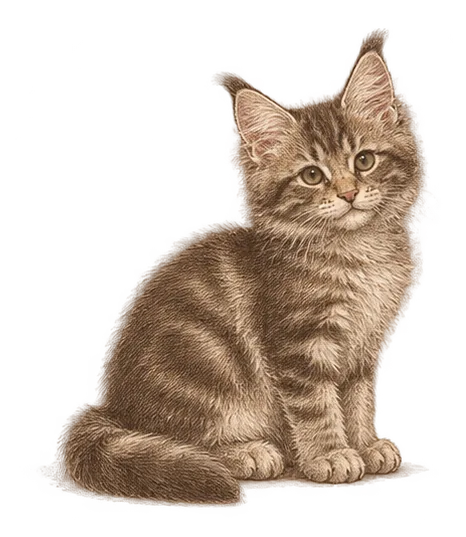
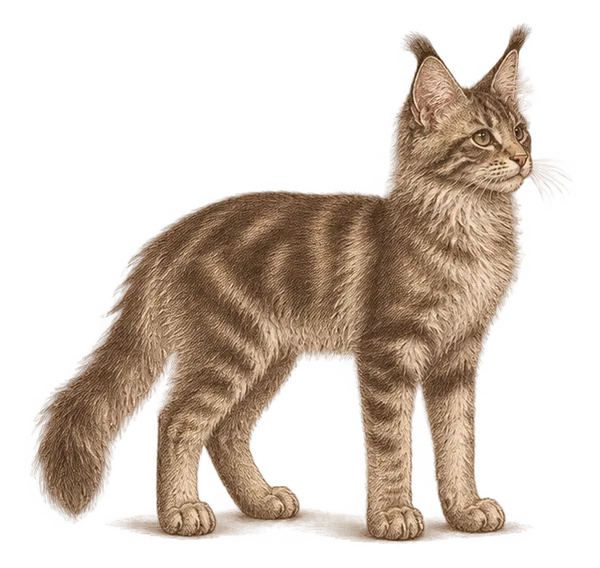
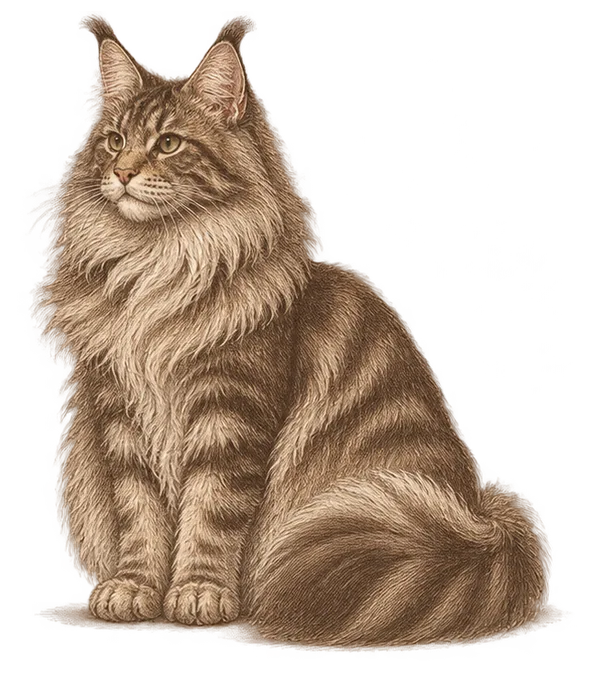
A Maine Coon can take three to five years to grow into those ears and paws. Many keep their kittenish love of games for life, and like to be wherever their family is.
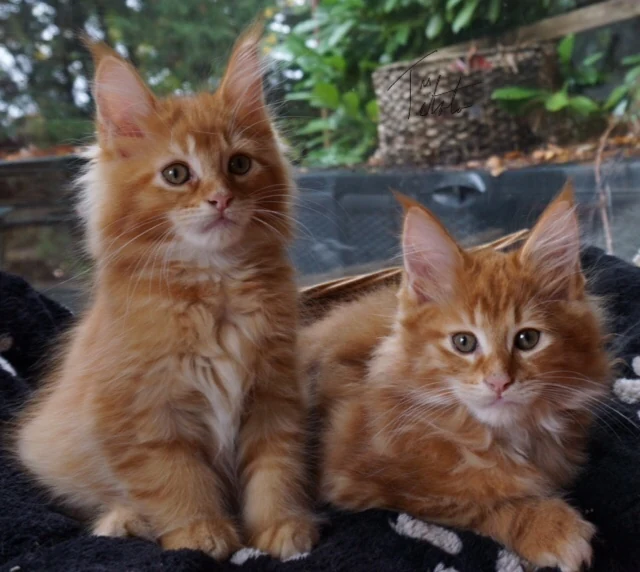
Look at the pair in Sheila’s photograph. Their upright ears already stand out, while their faces are still round and their necks have only a little fluff.
Sheila’s kittens usually go home at around 14 weeks. By then their families have followed them in weekly photographs.
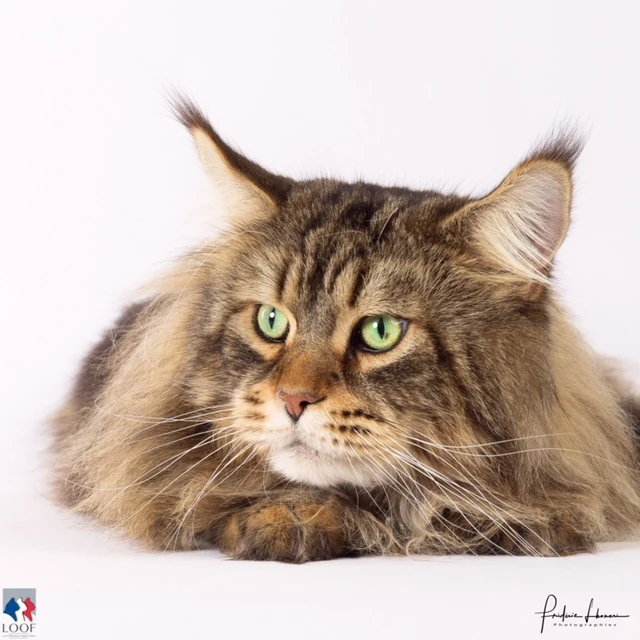
Tonka’s portrait shows the broad muzzle and thick collar of fur that give the adult Maine Coon such a recognisable face. The breed matures slowly. TICA gives a range of three to five years to reach full size. Each cat fills out at its own pace.
There’s more than one way to look grown-up. Coat colour, the fullness of the ruff and the size of the cat all vary.
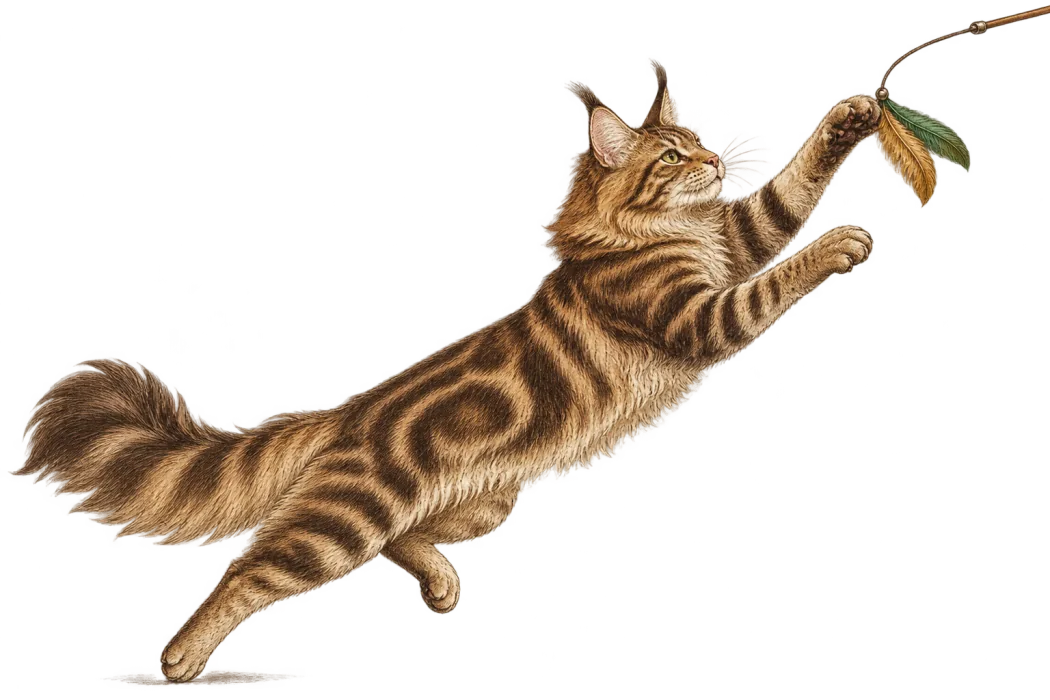
A feather changes direction. The eyes follow, the hind legs push off and two great paws reach for the catch. For a moment you can see just how much cat was folded into that crouch.
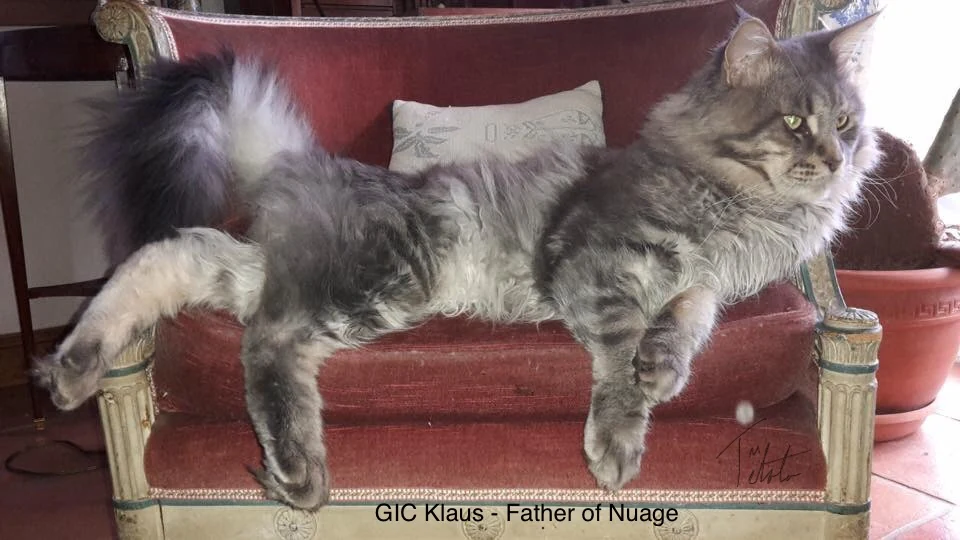
Klaus, off duty. An ordinary armchair gives his length away.
A feather in flightIllustrated movement study
Choosing a family companion
Good with children?
Often, yes. Maine Coons tend to be sociable and playful. Many enjoy sitting close to their people, and each cat has its own idea of how much company feels right.
The first hello
Have a grown-up sit on the floor with your child and let the kitten come over. A toy gives them something to do together. When the kitten wanders off to its quiet spot, that’s the end of the game for now.
Finding the right match
James and Anna remember Sheila asking about their household before inviting them to meet a kitten. Photos followed while they waited, and Sheila kept in touch after the cats settled in.
Listen for a little trill amongst the meows and purrs. Some Maine Coons carry on a quiet conversation as they follow you about the house.
A mind for mischief
Hide a favourite toy and a curious Maine Coon may set about finding it. Some learn to fetch. A few would happily spend just as long watching a dripping tap.
A coat worth knowing
Feel how the shorter fur at the shoulders gives way to longer fur on the sides, belly and tail. A comb a few times a week helps keep the longer coat free of tangles.
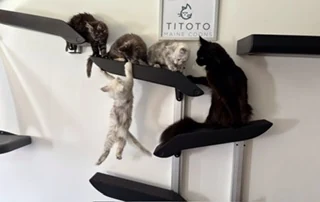
From a Titoto family
Florence, all grown up.
Kate remembers Tonka’s daughter unrolling the loo paper as a kitten. Florence later qualified as a Pets As Therapy cat. At home, she still liked to follow Kate from room to room.